THE STORY · FILE 002 · ARCHITECT · 1981 – present
The category I builtwas the one I needed first.
From a "dead or jail" prophecy in Trinidad. To Wall Street cybersecurity. To a $10M real estate portfolio built with my wife. To the AI system that scales the framework that protects every part of it.
FILE 002 · CHAPTER 01 · THE PROPHECY · TRINIDAD · 1988 – 1996
The sentencewas written first.
Teachers told my mother I'd end up dead or in jail.
I was seven years old in Trinidad. They said it like a forecast. Like they had seen kids like me before, knew where it ended, and wanted my mother to be ready.
That word, troublemaker, followed me from classroom to classroom. Until it stopped being a description. And started being a prediction.
Here's what nobody told me. A sentence somebody writes about you when you're seven becomes the architecture of every decision you make. Until you're old enough to fight it.
This is the first risk Mind Insurance protects against. The sentence written before you could read it.
I just didn't have the words yet.
FILE 002 · CHAPTER 02 · THE CHURCH FLOOR · BROOKLYN · 1996 – 2004
The Saturdaysthat taught me currency.
My family immigrated to America when I was a kid. And on Saturday nights, I cleaned our church.
Fifty dollars. A mop. The smell of pine cleaner and old hymnal pages. I did it to help my parents with bills. I did it to buy Jordans. Because at fourteen, in a new country with a new accent, the right pair of sneakers was the closest thing I had to a passport.
That's the part most people skip when they tell their immigrant story. The fluorescent lights at midnight. The empty pews. The math you do at fourteen. One bill. One pair of shoes. One shift at a time.
The church floor is where I learned that every goal has a toll. Financial. Time. Behavioral. You pay the premium, or the goal stays out of reach.
I just didn't know I was already paying premiums. I thought I was trying to fit in.
FILE 002 · CHAPTER 03 · THE DECKS · NEW YORK / INTERNATIONAL · 2004 – 2014
The first identityI built on purpose.
By my twenties, I was DJing in clubs across New York and flying to other countries to play.
I built the DJ identity on purpose. Loud. Visible. The opposite of the kid the teachers had named in Trinidad. On the decks I was somebody. In a way "troublemaker" had never let me be.
The lights were so bright I didn't notice for years that they were the only thing making me visible.
Here's what the DJ years taught me. And what Mind Insurance would later codify. External success is the most expensive identity to maintain. Every weekend you have to prove it again. Every flight. Every booking. Every crowd. Stop performing for one month and the identity starts to dissolve.
That was the first time I felt the collision Mind Insurance now names. Compass Crisis. Achievement without direction. Winning at a game I never agreed to play.
I would feel it again. Louder. More expensive. On a different stage entirely.
FILE 002 · CHAPTER 04 · THE DESK · WALL STREET · 2012 – 2020
Six figures.And the quietest desperationI have ever known.
I worked my way up from help desk to systems engineer to cybersecurity analyst at a Wall Street law firm. Eight years. Incident response. Compliance. Some architecture.
Six figures. Suit and tie. The kid the teachers had named was now the guy a Fortune 500 called when something went wrong inside the firewall.
I was, by every external measure, winning.
And I was crying at my desk.
I would call Jaz from the office some afternoons. She knew before I did. The frustration wasn't about the work. The work was good. The people were good. I was the misalignment. I was running an identity I hadn't built. A Black guy with dreads bringing morning greetings into a conservative environment that mostly stayed silent. Performing competence in a system I respected. And I could feel, somewhere underneath the spreadsheets and the dashboards, that the version of me sitting in that chair was not the one I was supposed to become.
Years later I had language for it. The most expensive collision I see in high performers is the one between who you are on paper and who you suspect you're actually meant to be. A salary can mute that signal for years. Mute, not erase.
The signal eventually finds a way out. Mine came out as tears at a desk no one knew I was crying at.
FILE 002 · CHAPTER 05 · THE LEAP · COVID · MARCH 2020
I left at the worst timeon purpose.
In March 2020, the world shut down. Cybersecurity was one of the safest jobs in America to keep. The firm offered severance packages to anyone who voluntarily wanted to leave.
I took it.
People thought I was crazy. During a pandemic. People were getting fired in every industry. Cybersecurity was bulletproof. I walked out of the elevator on my last day thinking the same thing they were thinking.
What kind of person leaves a six figure salary in the middle of a global emergency?
The kind who has been trying to listen to a quieter signal for years. And finally decided to stop arguing with it.
I told a handful of friends. I did not tell most. I did not want their doubt rewriting the belief I was trying to have for myself. My parents understood. They knew God was guiding me. Jaz had known the day was coming since the first time she heard me cry on the phone.
The leap looked like recklessness from the outside. From the inside, it was the first premium I ever paid on a policy I was just beginning to write.
FILE 002 · CHAPTER 06 · THE VINDICATION · REAL ESTATE · 2020 – 2021
We did 1.5×my corporate salaryin six months.
The first wholesale deal closed faster than I thought possible.
The second one followed. By month six, Jaz and I had earned 1.5 times my corporate salary in real estate. We were building. Slowly at first. Then in the steady cadence of people who realize the system they're inside is responsive in ways the corporate one never was.
Here is what I learned in those first six months. And it's the lesson I now teach corporate professionals who think they are behind. Your corporate experience is not time wasted. It is entrepreneurial training that you are getting paid for.
The skills that made me a competent cybersecurity analyst, risk assessment, incident response, compliance, systems thinking, were the exact same skills that made me a competent real estate operator. Different domain. Same architecture. The only thing that changed was which threats I was protecting against.
I just didn't know yet that I was about to spend the next several years protecting against threats nobody had named.
FILE 002 · CHAPTER 07 · THE WALL · GEORGIA · 2023 – 2024
$10M built.Marriage strong.And still, the wall.
By 2023, Jaz and I had built a $10M real estate portfolio. The marriage was real and it was good. We had grown together through every season. The first year. The seasons most couples don't survive. The drift-to-devoted work most marriages quietly avoid.
We had every proof point most people would consider the destination.
And I hit the wall.
Every high performer eventually hits this wall. And almost no one names it correctly when they do. The wall feels like burnout. It is not. It feels like depression. It is not. It feels like ingratitude. Which is the worst feeling of all. Because you have so much to be grateful for and the feeling refuses to leave anyway.
The wall is the collision between the version of you that built the life and the version of you the life is now asking for. The architect of the climb is not always the right operator for the summit. And nobody tells you this. Nobody sells you this. Nobody insures you against this.
I went looking for the book. The framework. The coach who had words for what was happening to me. I found pieces. I found nothing whole.
So I started writing what I couldn't find.

FILE 002 · CHAPTER 08 · THE BUILD · 2024 – present
The frameworkI couldn't find.
I started by naming what was breaking.
The pattern that made me crash relationships the moment they got close. The pattern that made me sabotage projects right before they crossed the line. The pattern that made every win feel quieter than it should have.
I gave them working names. Past Prison. Success Sabotage. Compass Crisis. And I started watching for them in everyone I coached.
The patterns were everywhere.
Rental investors stalled at 60 units. Speakers underpricing their stages. Operators who thought their problem was the market and slowly, painfully realized the problem was the operator. Every one of them stuck on a pattern they had never named. And once we named it, the pattern began to lose its grip.
I spent twelve months alongside an NYC board-certified neurologist learning the brain science underneath what I was already seeing in coaching rooms. I trained with Brendon Burchard and earned the Certified High Performance Coach designation. I trained in Relational Intelligence. I earned my Certified Spiritual Director designation under Dr. Dharius Daniels. I assessed three thousand entrepreneurs.
Out of all of that came Mind Insurance.
A protection system. Three Acts. Four Pillars. Ten Collisions. One PROTECT method. Not therapy. Not coaching. Not mindset. A new category. Behavioral Self-Awareness. For the gap none of the existing categories were built to cover.
It is the framework I would have given the seven year old in Trinidad. The teenager cleaning the church. The DJ on the decks. The cybersecurity analyst at the desk. The newly minted entrepreneur at the wholesale closing. The husband holding his wife's hand at the wall.
Every version of me would have benefited from a policy I didn't yet know existed.
So I built the policy.
Then I ran into the next problem.
The framework worked. I knew it worked. I had three thousand assessments to prove it. But the math of human delivery was brutal. I could only sit across from a few hundred people a year. The people who needed Mind Insurance most could never afford a 1:1 engagement. And the framework was too important to belong to the few who could.
That is when I started building MIO.
FILE 002 · CHAPTER 09 · THE CROSSOVER · 2025 – present
Same architecture.Different domain.
For eight years on Wall Street, I built systems that protected a Fortune 500 from external threats. Malware. Intrusion. Breach. Compliance failure. The discipline of it never left me.
What I'm doing now is the exact same discipline. Pointed in the exact other direction.
In cybersecurity we talk about threat detection. In Mind Insurance, we call it pattern detection.
In cybersecurity we have incident response. In Mind Insurance, we have trigger reset.
In cybersecurity we run risk assessment. In Mind Insurance, we run the Identity Collision diagnostic.
In cybersecurity we enforce compliance. In Mind Insurance, we practice PROTECT.
Same architecture. Different domain.
The threats we couldn't see used to be the ones outside the firewall. Now I build protection for the ones inside it. The patterns that quietly bankrupt high performers before any external threat ever gets the chance.
That's what gave me the framework. And it's what made MIO possible.
When you build cybersecurity systems for eight years, you don't just learn to detect threats. You learn to build the engine that detects them at scale. Pattern recognition. Real-time monitoring. Risk scoring. Alert systems. The architecture of automated protection.
That same architecture is what MIO runs on.
MIO is the world's first AI-powered behavioral self-awareness platform. It does for the inside of you what I used to build for the inside of the firewall. Detects the pattern. Names it. Alerts you before it produces a measurable cost. Daily. At a scale no human coach can deliver.
Most coaches don't have the cybersecurity discipline. Most cybersecurity professionals don't have the coaching depth. Almost nobody has both. Plus the certifications. Plus the operator's portfolio. Plus the marriage. Plus the three thousand assessed entrepreneurs. Plus the AI build.
The framework had to come from this exact intersection. I think the AI had to come from it too.
FILE 002 · CHAPTER 10 · WHAT'S NEXT · 2026 – 2028
Insurancefor every mind.
The mission is one million minds protected by 2028.
To get there, the framework moves on three tracks.
MIO. The AI that delivers Mind Insurance daily, at scale, to anyone with a phone. The reason "one million minds" is a math problem, not a marketing line.
The book. The definitive printed canon of Behavioral Self-Awareness, available before December 2026.
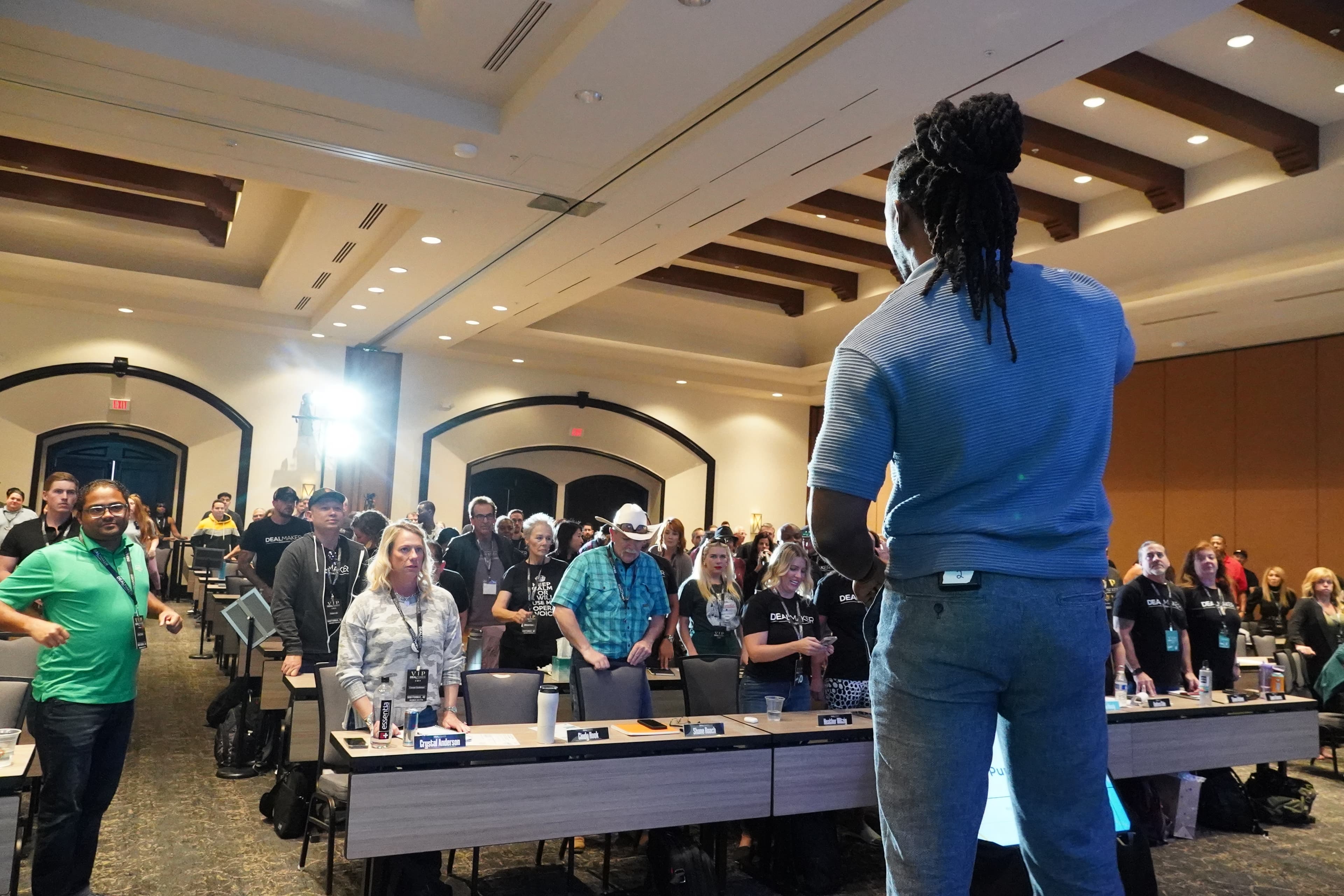
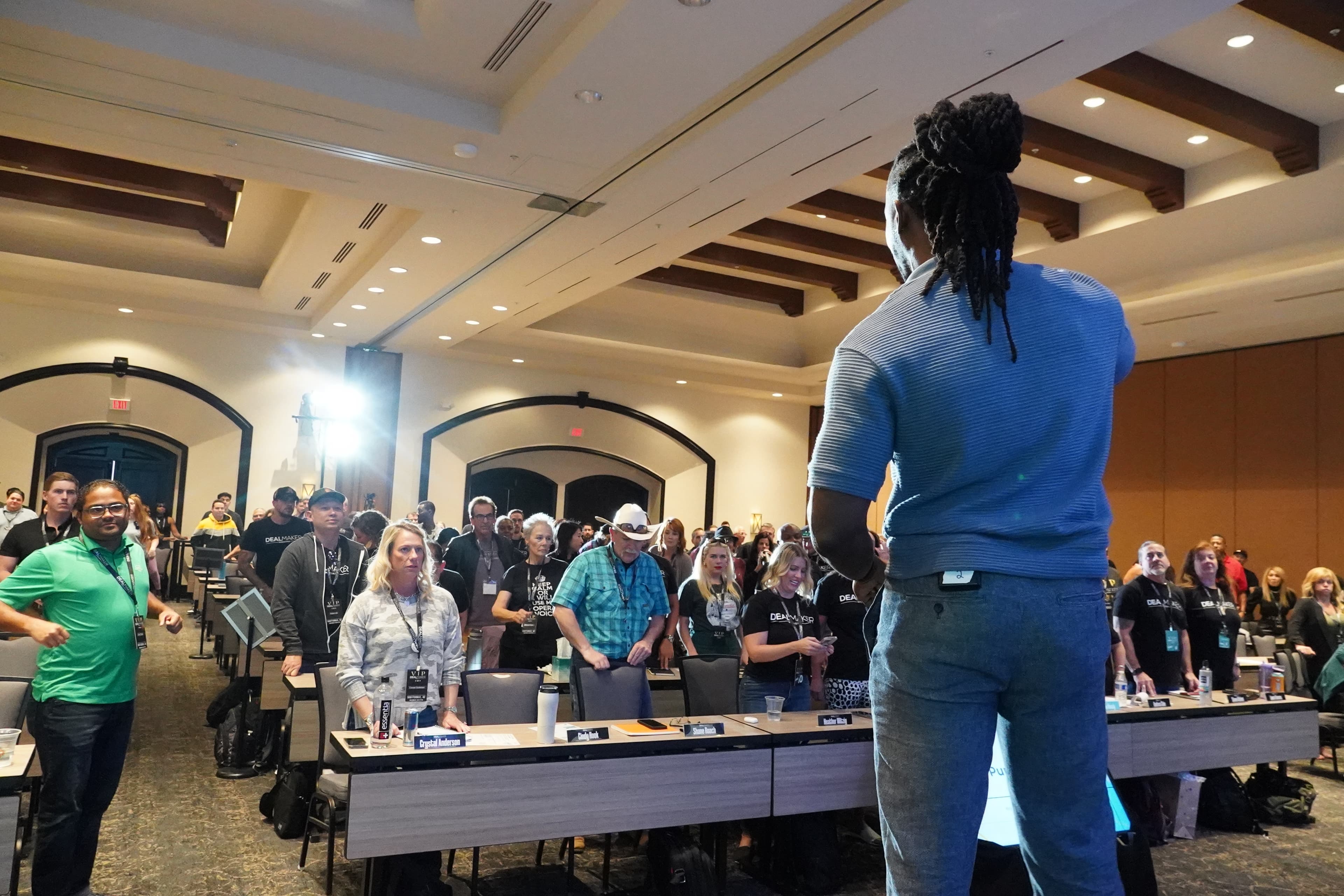
The stage and the workshop. The rooms where I personally bring the framework to leaders, brokerages, corporate teams, and operators who need it named in person.
Henry Ford didn't invent the car. He made it a commodity. He took something that had been a luxury and made it accessible to anyone who needed one. AI is the only reason I can do the same thing for the most expensive asset a person owns. The mind that runs every other thing they care about.
No one should have to wait for collapse, a book deal, or a private coach to find the framework that protects them. And nobody should have to wait for a $10K coaching engagement to receive the protection that was always supposed to be theirs.
Insurance for every mind.
Keston Glasgow, AI Strategist for Human Performance · Architect of Mind Insurance
Find the pattern that's running you.
12 questions. 2 minutes. Pattern read.